
 In the world of eCommerce, it’s easy to feel intimidated by big players like Amazon and eBay who seem to sell everything. But guess what? There are still areas into which their mighty tendrils don’t reach. Maximize your niche content and unique company personality to attract customers who crave authenticity.
Small is beautiful – you can be more agile, more reactive, and creative. Use your small size to your advantage and level the playing field against the big players. People trust small to medium companies more than big companies (it’s the whole ‘relatable’ thing) – use this to your advantage. Forget “browse on smartphone, buy on desktop”, retailers and eCommerce companies must ensure the user experience is consistent, synchronized and seamless not only for mobile, but across all devices and platforms.
I’m going to share some of my most effective SEO tips that I’ve used within all kinds of eCommerce marketing campaigns to increase organic search traffic. This ranges from small businesses and startups through to well known public companies.
One thing that I’ll guarantee is that there will be an absolute minimum of one new SEO technique that you’ll learn and be able to implement straight away. We created a quick jump menu to make it easier to navigate this 20 chapter guide. Happy reading!
[vc_column border_color=”#EEF5FB” width=”1″ css=”.vc_custom_1486592267323{background-color: #EEF5FB !important;border-radius: 5px !important;}”][mk_fancy_title size=”40″ font_family=”none”]Quick Jump to a Section[/mk_fancy_title][mk_custom_list]
- Keyword Themes
- Create Free Content
- Killer Email Campaigns
- Stock Unique Products
- Personalize Your Ads
- Align Branding With Your Audience
- Move Fast
- Go Multi-channel
- Have Excellent Customer Service
- Fun Social Media Channels
- Have Amazing Product Images
- Write Fun Copy
- Spread Costs
- Build User-Friendly Site
- Keep Staff Costs Low
- Become Part of The Community
- Invest In Mobile
- Categorize Better
- Speed Up Your Website
- Add Value By Being Helpful
[/mk_custom_list][/vc_column][vc_column width=”1″][/vc_column][vc_row][vc_column][vc_column_text]
1) Think about your keywords thematically

The three keys to successful SEO are the usability of your site, the relevancy of your content, and your domain authority. Theme-based SEO allows you to focus your SEO efforts on an overall topic or “theme” rather than targeting single keywords so that Google can view your site is an authority when it comes to that set of keyword concepts, subjects and categories that are topically and semantically related.
 RECOMMENDATION
So to reiterate raw keyword repetitions and simplistic rules don’t take you far in 2017, but… related topics absolutely do. Google wants to see documents that intelligently use words and phrases that connect — semantically, lexically, and logically — to the queries searchers are using. Those topics help tell Google’s on-page quality analysis systems that your content A) is on-topic and relevant, B) includes critical answers to searchers’ questions, and C) has credible, accurate information.
Keywords are crucial for SEO because it is what search engines use to understand your site and gauge its relevancy. Target the right keywords and nail SEO for your website so that customers will find your site when they are searching for related topics. Good keyword research takes time and market knowledge, but it’s not expensive and many big players get it wrong all the time. Shopify Nation has a keyword guide specific for eCommerce companies that could be useful.
Though keywords are important for SEO, don’t stuff as many as possible into your content and headings. Search engines use latent semantic indexing and will expect to see a broad range of keyword topics and themes, not endless repetition.
2) Create great content for free
 Content doesn’t have to be fancy or expensive – use the digital environment around you to help you create great original content:
- Run audience surveys for user insights and gather their answers into fun listicle posts.
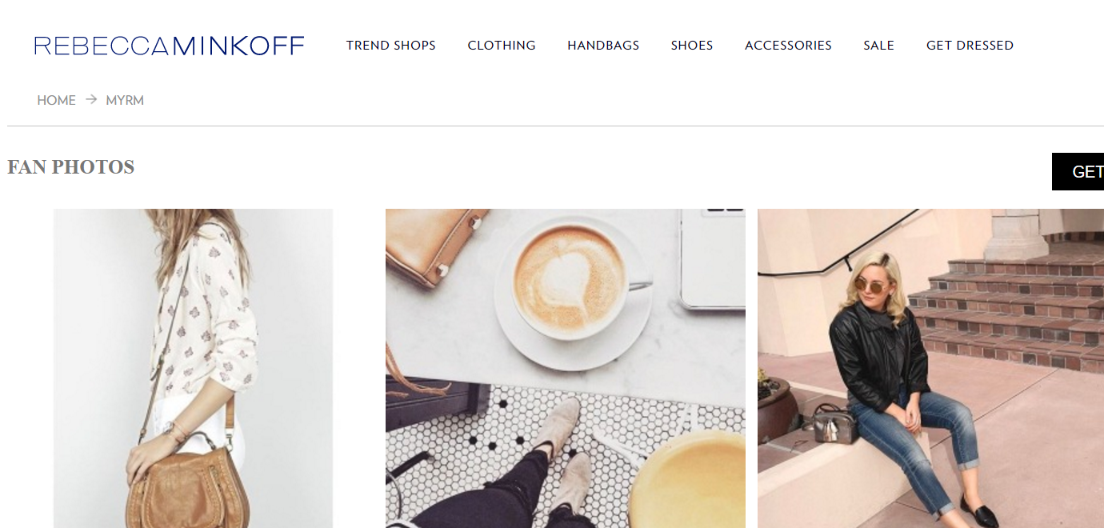
- Encourage your customers to become brand evangelists and have them “Get Featured” by submitting photos or content. E Commerce Fashion Startup Rebecca Minkoff website, has a get featured page for fans that encourages them to upload and showcase their products.
- Publish roundups of industry resources and writers and cut down time spent on creating content – recycling is cool.
- Social media roundups can be really fun – use the advanced search functions to find trending (and relevant) topics.
3) Killer email campaigns
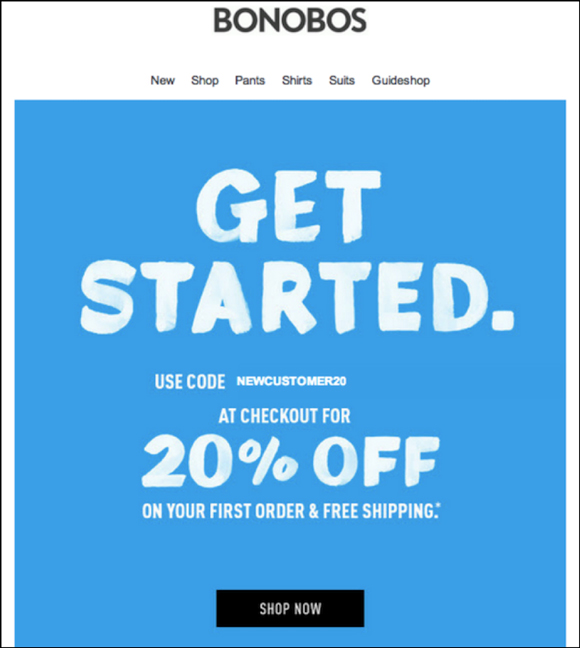 Above is an example of a welcome email from Bonobos, of which they’ve chosen to strip things down and keep it simple. You’ll see the same basic design – logo, menu with categories, then the content. Don’t underestimate the power of email – it is a tried & tested and cost-effective marketing tactic.
- Great content is the backbone of a successful email marketing campaign. Make sure your message reflects your USP.
- Create a proper narrative for your email series so that subscribers are slowly drawn into your sales pitch.
- Always split-test emails and develop a distinctive brand voice.
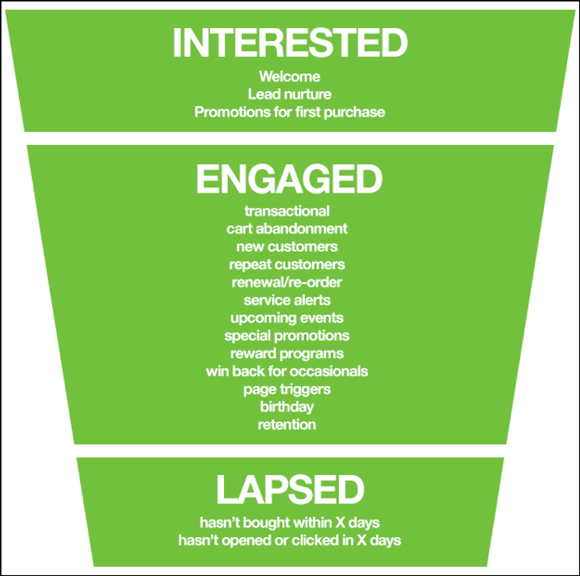 This above image is a typical eCommerce email funnel broken down into 3 stages:
- stage 1 Interested, You can send a welcome email that is designed to welcome them to the family, indoctrinate them into your brand, and encourage them to make their first purchase.
- stage 2 Engaged, You can optimize your transactional emails to provide product recommendations based on what they just bought.
- stage 3 Lapsed, You can send a re-engagement campaign that unsubscribes people if they don’t respond.
4) Stock beautiful & unique products
 If you have the perfect products to sell, they will (practically) sell themselves. Target niche products for less competition and be unique, not generic. As an example, a New York resident entrepreneur Danielle Baskin, owner of the startup Inkwell Helmets, has created unique product offering (hand painted bike helmets) that has generated her eCommerce shopify site a lot of press.
- Beautiful and unique products are sought after and will entice customers – try to find unusual suppliers and negotiate exclusive deals where you can.
5 ) Personalize and retarget your ads
 Maximize a small ad budget and reach a wide audience for less.Make the most out of your advertising with personalization and retargeting. It’s all about having a strong value proposition and being in front of the right people at the right time.
6 ) Branding that hits the sweet spot
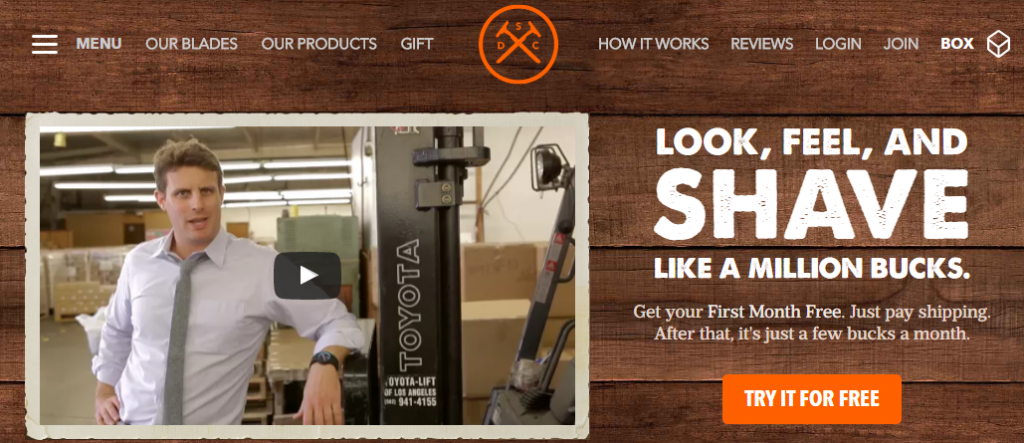 Don’t waste your time trying to please everyone. You need to stay true to who you are as a brand, and align this to what your customers value the most. Think about brand values, core habits and behaviors – look beyond the logo to your core.
7) Move fast
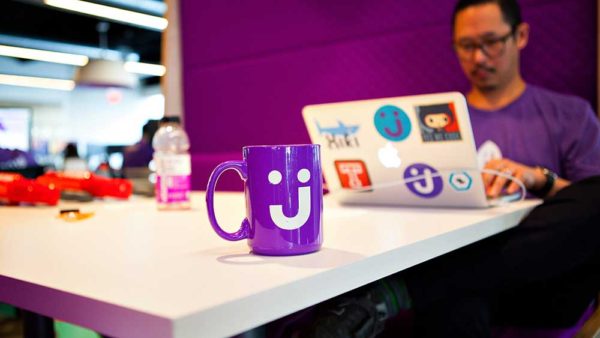 The biggest advantage of running a small company or startup is your ability to adapt, pivot, grow and change when needed. Take advantage of new opportunities and react to the changing market fast to gain a bigger market share. When the e-commerce startup Jet.com first launched in 2015, they thought they would compete directly with the big boys like Amazon and Walmart, by offering consumers a highly competitive pricing on products, and by charging members a 50 annual fee as its main source of profit. Well 2 months in, they realized most consumers did not like the fee, so they pivoted their e-commerce model by raising prices on items, focused generating sales commissions from their merchants sellers and investing proprietary smart checkout technology. They eventually went on to a 3.3 billion M&A sale to Walmart.
8) Monetize & go multichannel
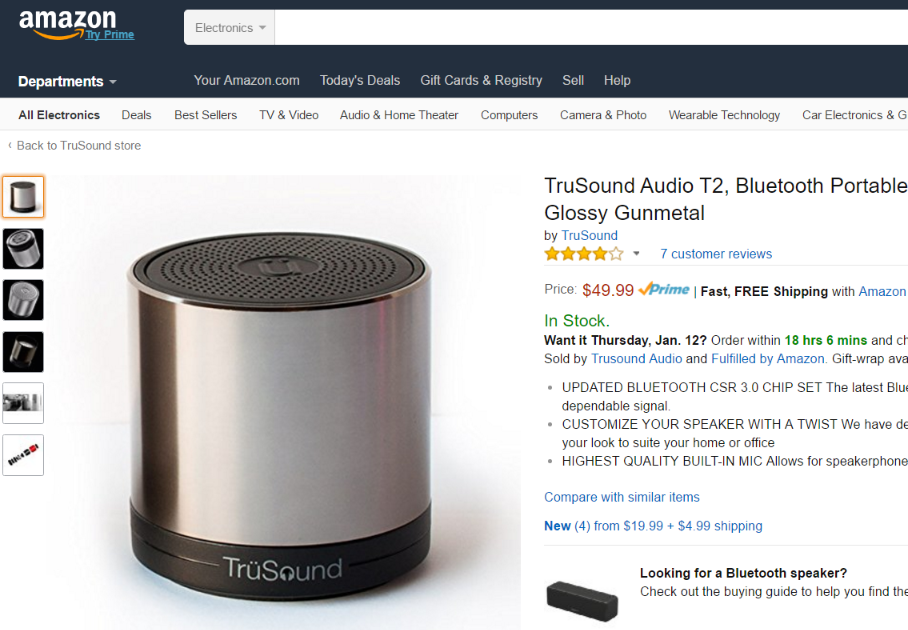 Utilize multiple channels to reach new customers, and never miss out on an opportunity to monetize! Earn money through affiliate marketing, advertising and selling on third-party marketplaces to supplement your online store income. Even though the title of this post is about how smaller eCommerce websites can compete with Amazon, you also can take advantage of their massive search ranking authority, traffic volume, conversion optimization and list and sell surplus inventory of some of your products.
9) Excellent customer service
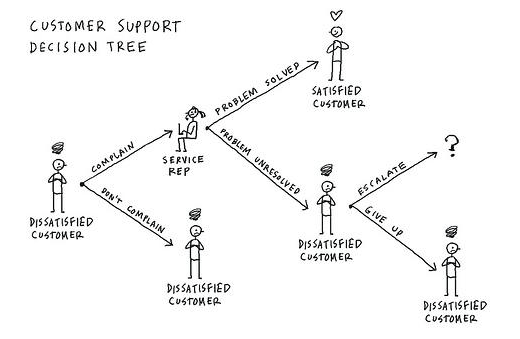 Use your small size to your advantage and provide impeccable customer service that feels real. Interact with people on social media, pick up the phone, send out comment cards, and offer online chat and help tools. Make sure your customer experience is something to be proud of. Assist customers in anything they may need, resolve issues fast, and put the customer at the center of every interaction to make them feel valued. This is one of the best ways to compete with mega retail sites like Amazon have been to provide something that they can’t. They can’t provide personalized, one-on-one service to human beings like you can.
10) Fun social media channels
 The lack of control means that you can have more fun with your social media brand – you haven’t got to get each tweet signed off by seven departments! Online Backcountry retailer MooseJaw has a lot fun on there instagram channel.
- Utilize social media marketing to it’s fullest for your brand – it’s cheap, fast, and effective marketing.
- Experiment with live video to up the ante and host giveaways to gain more followers.
11) Amazing product imagery
 Take pride in your products and have incredible product images on your site. Customers will be more inclined to purchase from you if your products are visually inspiring – try to steer away from bland manufacturer imagery.
12) Fun copy
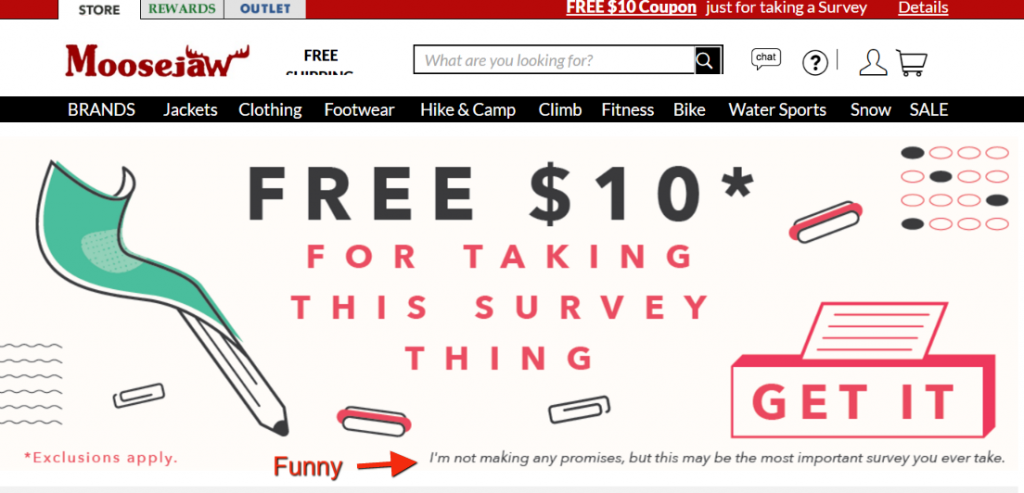 Showcase your human side and write fun copy to reinforce your authenticity and uniqueness – don’t let dull and dreary product pages hold you back. Use good calls to action to keep the user browsing and inject personality into your store by hiring skilled writers (or unleashing your own creative side). Here are some pro copywriting tips to help get you started.
13) Spread costs
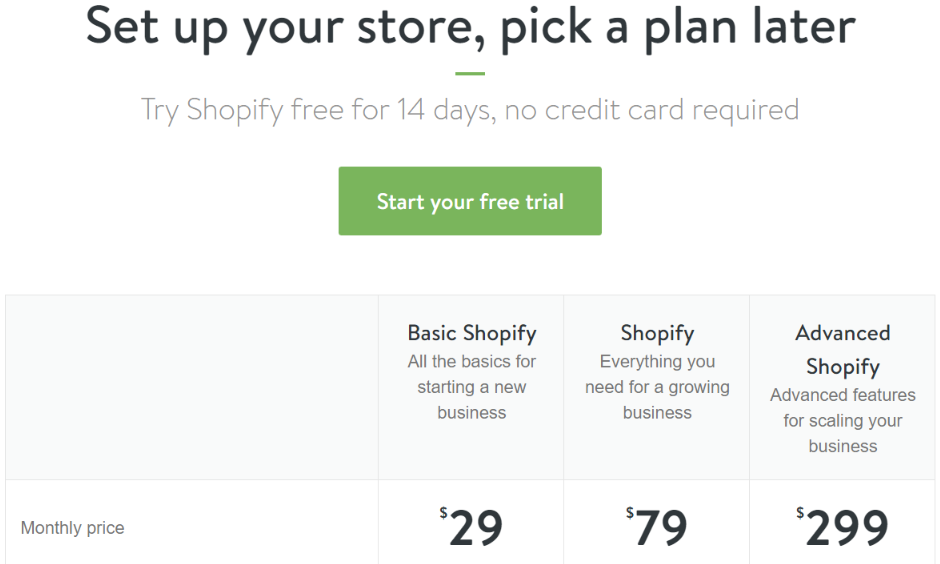 Spread costs over the year to make your money go further so that you can plan and budget for the future. Have a sensible spending plan in place to help you manage cash flow and never pay out for loads of things at once, especially in the early days of your company.
- Go for subscription plans to help you spread costs at first (but be aware that you might end up ultimately paying more this way).
- Spread web build costs by using a pay-monthly online store builder but keep an eye out for any additional costs – they can start to creep up. Learn how to do things for yourself in order to economize.
- Figure out which months are going to be best for you in terms of sales revenue and try to time big payments accordingly.
14) Build a site that’s a pleasure to use?
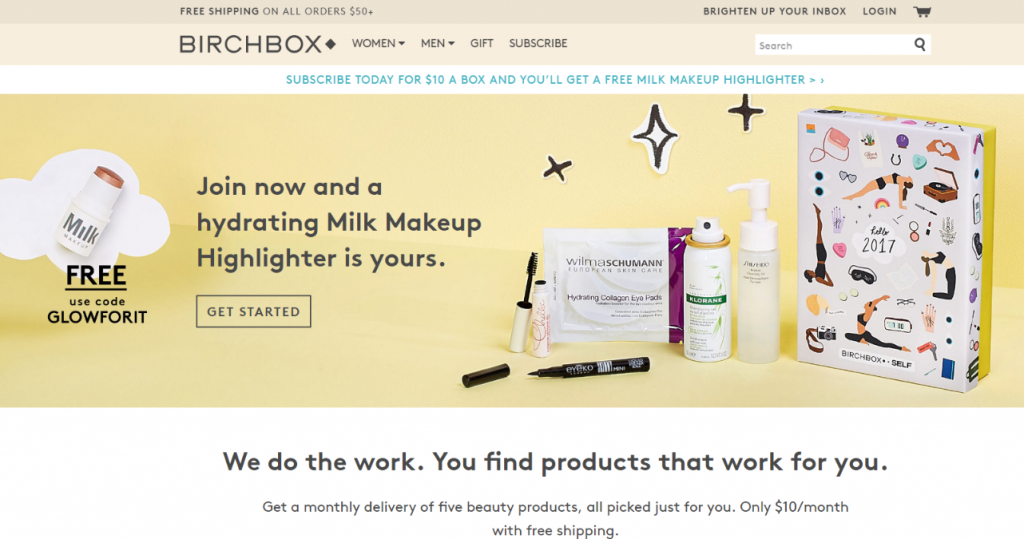 Let’s be honest: Amazon and Ebay may have great prices and be really easy to use, but their ugly websites can be pretty ugly. But opposite to that, many niche eCommerce websites may be beautifully designed, but are lacking in user experience functionalities. A great eCommerce site, (whether it is developed in a shopify platform or custom) must have both, especially if you’re selling high-end or luxury products. Digital marketers’ top retention strategy even before email marketing campaigns and loyalty programming is simply a pleasing site that visitors will return to because they had a great browsing and shopping experience. We had the opportunity of meeting Birchbox’s CEO Katia Beauchamp at a Cornell Tech Bloomberg Women’s Entrepreneurship event in NYC, where she says they built a machine learning platform to both predict and provide delight experiences for their customers.
This should encompass both beauty and practicality elements: from eye-catching visuals and content to the more practical aspects of user experience (UX) like faster page loading time, ease of checkout ability, mobile site responsiveness, and overall ease of product discovery, both in the navigation and in curated product detail and product list pages.
 Particularly for eCommerce startups, where customers are making a purchase online, the user-experience offered through website design is critical. A poor onsite experience could result in a decrease in sales and even the slightest onsite issues or inconveniences could result in a customer leaving the site and never returning.
You may want to hire a digital marketing consultant to help hone the on-site experience to quickly and poignantly provide the unique selling position, compelling brand/product story, display, social proof through reviews and press mentions, lower perceived risk of the transaction with security seals, trials, money-back guarantees, etc., clearly drive people to your primary calls to action (CTA’s) while minimizing superfluous distractions and clutter.
15) Low staff costs
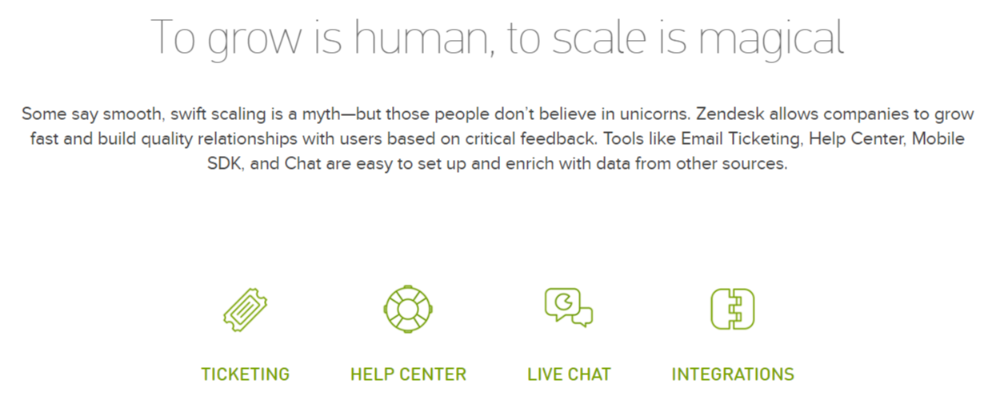 Minimize staff costs by using non-traditional avenues to complete tasks.
- Cut out the stock room and delivery staff wages by going for the drop shipping model. Take a look at reputable drop shipping companies to find out which one would work for you.
- Hire virtual assistants and PAs to help you manage orders, billing, customers, and website updating. Zendesk helps a lot companies. Embrace the power of a fully digital workforce.
16) Be part of the community
Involve yourself in the local community to get your brand more visibility locally.
 Get involved in community events like arts and craft fairs, host talks at schools, and launch seasonal pop-up stores to get noticed. Getting involved with community events is a great way to get some genuine brand PR and find a new pool of loyal customers. For instance, as part of its wine club, Bonny Doon Vineyard hosts member only events like this dinner set at one of its Vineyards. This dinner, in particular, featured a 5-course meal with two wine samples with every course.
17) Invest in mobile
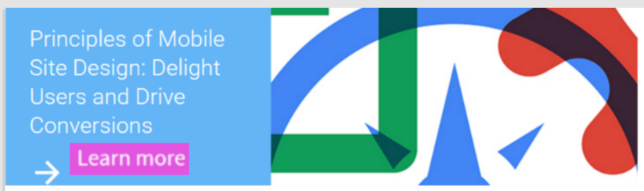
 Shopping behaviors have changed, with many users now purchasing on their smartphones. Reach and engage users where they are, regardless of their device by investing in responsive web design and mobile apps and mobile selling. It’s cheaper than you think – mobile UX pays dividends. Google just announced last November 04, 2016, that they are now using a mobile first index in their algorithms, to retrieve, crawl, render and rank search results. This is continuing a trend of Google increasingly emphasizing the mobile user experience.
This new algorithm could have serious impacts on mobile and desktop performance, even for businesses that don’t get large amounts of mobile traffic, and who may have so far deprioritized mobile site friendliness up until this point.
 ,
,
18) Categorize better
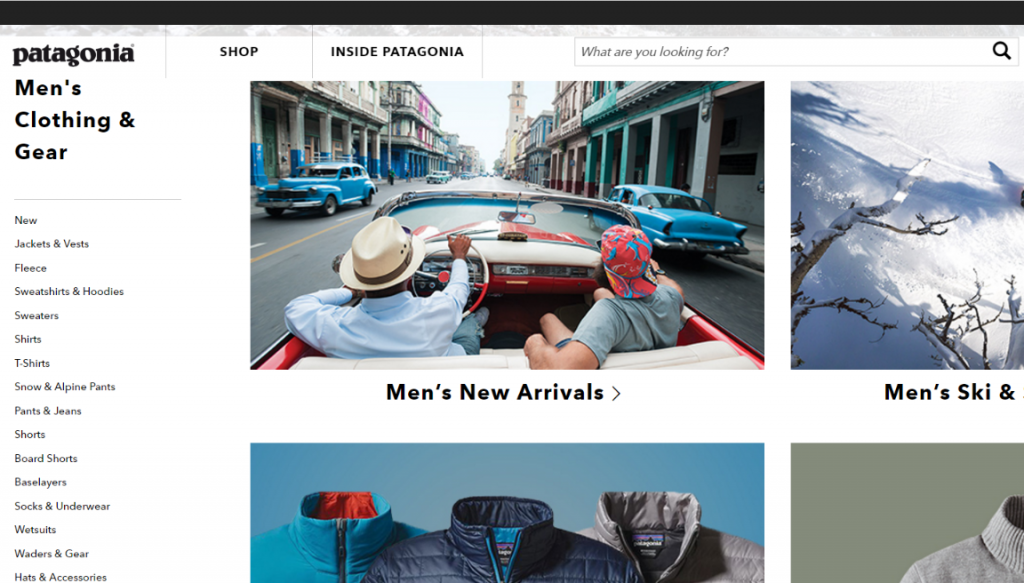 Why not make your category page interactive and enjoyable to use? Customers appreciate unique and fun-filled category pages to brighten their shopping experience. Step away from tired and dull categories and add a little imagination to help customers who aren’t sure what items they need.
19) Website Speed Matters for Conversions
 Site speed vital: one out of four site visitors say they’d abandon a web page that takes more than four seconds to load. Walmart found that for every second of page load improvement, they experienced up to a 2% increase in conversions. For every 100 ms of improvement, they grew incremental revenue by up to 1%. That’s enough of a reason to work with a developer and implement backend strategies like browser caching, updating site taxonomy, compressing images, and removing old tags, to improve site speed on every device. Another tip, especially if you start to get a lot of traffic is to upgrade your web hosting to something like Wp Engine so you have the bandwidth and do not crash your site.
20) Be Very helpful!
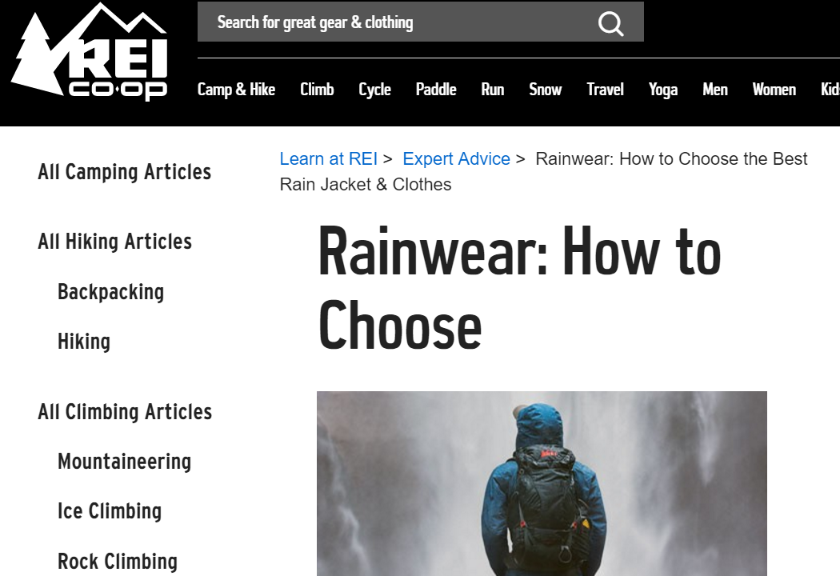 Offer value to customers with more than just your products and services. Provide user-oriented content and help guides to add value to your site. REI is a great example, check out this early-stage content guide from REI on finding the proper rain gear for you. This helps a potential buyer answer all of the questions they need to know in order to make a confident purchase without aggressively pushing them to do so. It even highlights the cons of choosing a specific type over another! Even if your early stage content (researching products ) does not immediately lead to a conversion, it can help you establish trust in your relationship with the otherwise faceless consumer.
- Give your customers more – support them through the product lifecycle with videos and downloadable guides. Offer valuable hints and tips on your store’s blog.

RECOMMENDATION
Size isn’t everything. Master the art of SEO, put customers at the heart of your endeavors. Offer real personalized customer service and get creative with your marketing to set your brand apart from the competition. Create better content: Amazon is essentially a bare bones search engine for shopping. It provides the most basic product information. Brands can differentiate themselves by infusing content-rich product pages, easy-to-navigate browsing experience, detailed product descriptions, more pictures, guided selling tools, personalized products, helpful content guides, user-generated content and even video merchandising to show your products in use.
How do you compete with other ecommerce companies? [/vc_column_text][/vc_column][/vc_row]





One Response